
The Neuropathy Project
For Patients + Providers
Rethinking Peripheral Neuropathy
Find Your People.
Find Your Success.
Healing the Hidden Nerves - Community
You don't have to navigate neuropathy alone. Healing the Hidden Nerves is a supportive Community powered by Stenzel Chiropractic Clinic — where you can:
#ASK — Got questions about neuropathy or our practice? Ask our team and community directly — no question is too small.
#PRAISE — Found a member's suggestion helpful? Give them a shout-out and keep the encouragement flowing.
#WIN — Share your neuropathy wins, big or small. Every step forward deserves a celebration!
Unlimited access to our growing library of exercises, recipes, digital health downloads, and courses designed to help you take control of neuropathy.
A community that gets it — connect with people on the same journey who understand what you're feeling.
For Providers:
Mastering Peripheral Neuropathy
Helping patients with peripheral neuropathy requires a deeper level of expertise — and it can become one of the most rewarding services in your practice. Mastering Peripheral Neuropathy gives you the clinical knowledge, hands-on protocols, and business framework to confidently add a thriving cash-based neuropathy service to your practice. Here is what you'll learn:
Foundations of Neuroanatomy & Cellular Health — Build the core knowledge to truly understand nerve function and healing.
How Neuropathy Develops in Metabolic Environments — Go beyond symptom management and address root causes.
A Complete System of Care — Pre-exam consults, examinations, and step-by-step treatment protocols ready to implement, affordable equipment selections, and tutorials.
Patient Education Resources — Materials that help your patients understand their condition and treatment journey.
The Neuropathy Lab Community — Connect with fellow doctors to discuss cases, share wins, and problem-solve together.
The Questions People Ask About Neuropathy
The Answers You Deserve
Peripheral Neuropathy is the set of symptoms that arise due to the damage to nerves located within the Peripheral Nervous System.
What is Peripheral Neuropathy?
What is the Central Nervous System?
The Central Nervous System consists of the Brain and Spinal Cord.
The Peripheral Nervous System consists of any nerves outside of the Central Nervous System or Brain and Spinal Cord
What is the Peripheral Nervous System?
What is the number one Cause of Peripheral Neuropathy?
The number one cause of Peripheral Neuropathy is Type II Diabetes.
Can Peripheral Nerves Grow Back?
The Short Answer - Yes!
As always, there are cases when regrowth is not possible. BUT, this knowledge is worth exploring when overcoming damage.
What Do Damaged Nerves Need to Grow?
There are six items needed for peripheral nerves to live, grow, and thrive. Those ingredients include: Food, Oxygen, Stimulation, NeuroTrophic Factors, Healthy Tissue, and Healthy Mitochondria.
Food - certain ingredients are needed to encourage and maintain healthy nerves
Oxygen - Nerves require oxygen to survive
Stimulation - If nerves are not stimulated appropriately, they will die
NeuroTrophic Factors - These are the ingredients needed for nerves to know where to grow
Healthy Tissue - If the correct type of tissue is not available, a nerve is less likely to grow in a healthy manner.
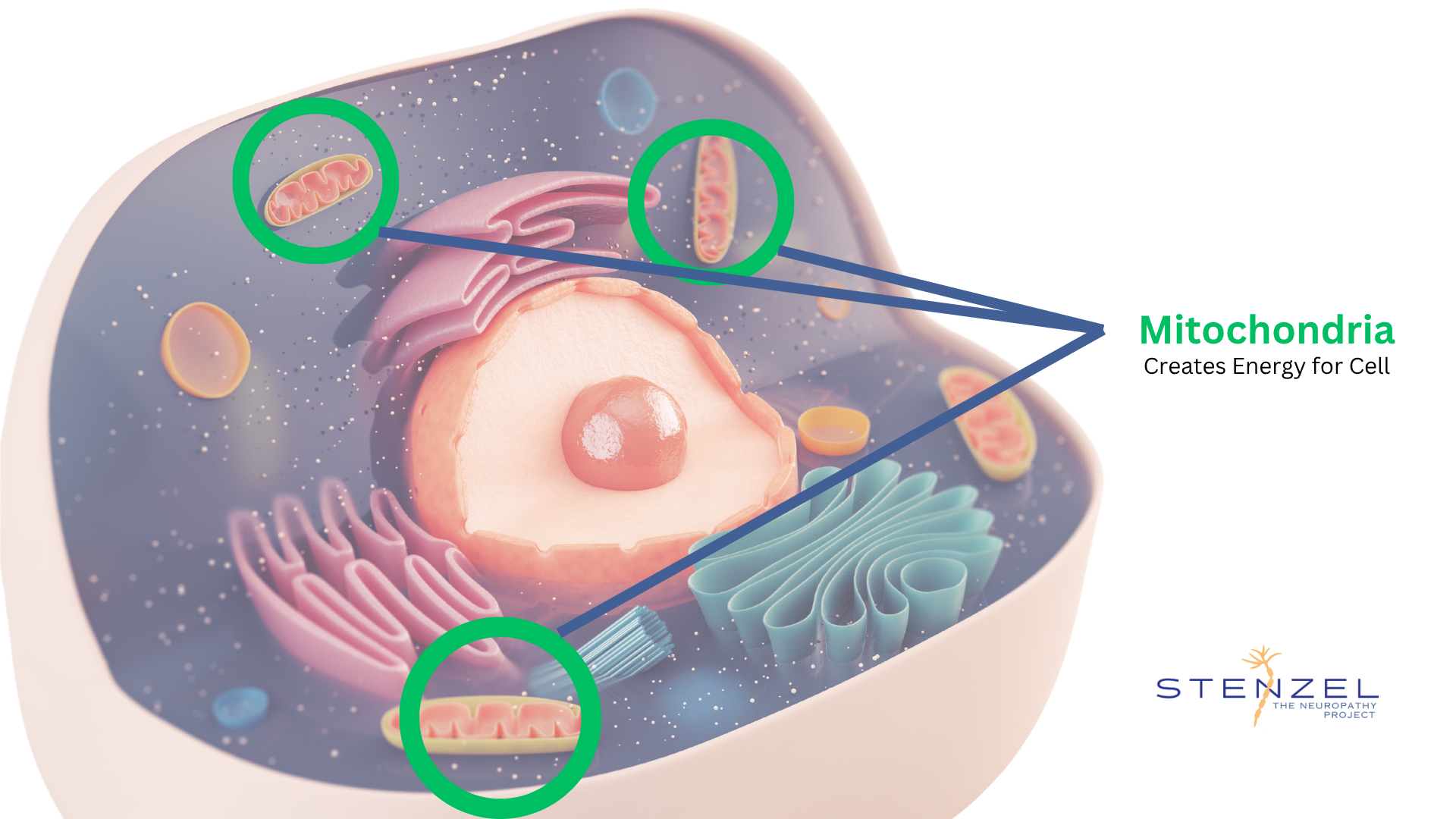
Healthy Mitochondria - The mitochondria are nerve cell machinery that covert foods into useable energy, so the cell can carry out important processes to live, grow and thrive.
Why do I have pain from Peripheral Neuropathy?
This is a complex question that can be answered by understanding a few concepts of pain:
Pain is a safety mechanism that protects your body from injury. Believe it or not, your pain is always turned on.
Special sensors in your skin, muscles, joints and other tissue — called MechanoReceptors — act like an "off switch" to turn off your perception of pain.
If nerves are directly damaged, or mechanoreceptors cannot be activated, Neuropathic Pain and Symptoms will begin to be experienced.
I use to have Pain, but now I have numbness. Is this a good thing?
Many people become relieved when their uncomfortable symptoms become numb. Numbness is a sign of increased nerve damage. Consider these symptom concepts:
Positive Symptoms - There is not yet a disconnect from damage between tissue, Peripheral Nerves, and the Central Nervous System. Symptoms of Neuropathy are still felt.
Negative Symptoms - Damage has caused a disconnect between tissue, Peripheral Nerves, and the Central Nervous System. Aggravating Symptoms are typically lessened, and numbing sensations arise.
Can Inflammation cause Neuropathy Pain?
Yes. Chronic inflammation can lead to nerve and tissue damage. This damage occurs through a process called Cellular Senescence.
Cellular Senescence - The process by which cells stop dividing permanently after experiencing stress or damage, such as DNA injury.
Because of this phenomenon, abnormal fibrous tissue can form.
The formation of this abnormal tissue reduces the activation of mechanoreceptors and nerve healing, resulting in pain.
How does Diabetes cause Neuropathy?
This is a very complex question with a complex answer that will require an understanding of disease. Let’s explore what that means.
Type II Diabetes is actually a symptom, or a result of cellular metabolic dysfunction.
What is Cellular Metabolic Dysfunction?
Cellular Metabolism Dysfunction: when a cell has too much or too little of the ingredients it needs, its inner chemistry becomes unbalanced, and the cell can't do its jobs properly.
What do I need to know about Cellular Metabolic Dysfunction?
We have identified some of the most powerful biochemical processes that, when functioning inappropriately, can lead to Neuropathy:
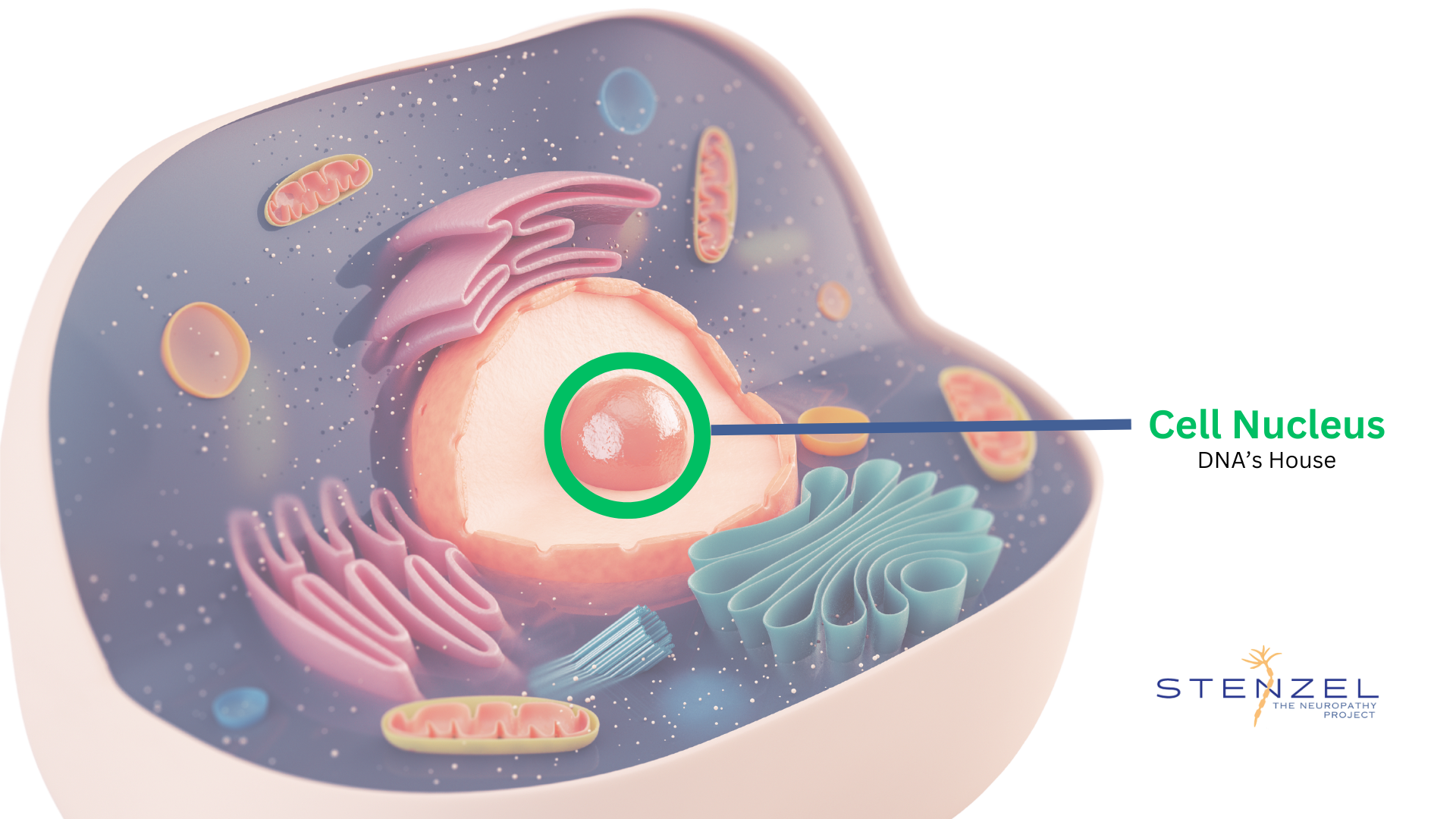
DNA Health - Your DNA is the instruction manual for your cells. It tells each cell what to build and how to behave. When DNA gets damaged, those instructions get scrambled — and the cell's machinery, from energy production to repair, starts to break down.
Mitochondrial Health - Mitochondria are tiny power plants inside your cells. They convert food and oxygen into the energy your cells need to function, heal, and thrive. When mitochondria struggle, cells run low on energy — and damaged cells struggle to repair themselves.
NAD+ (Nicotinamide Adenine Dinucleotide) - a helper molecule (coenzyme) found in every cell. It's essential for hundreds of reactions, especially converting food into usable energy and repairing damaged cells. As we age — or in conditions like diabetes — NAD+ levels decline, leaving cells with less energy and slower repair.
If there is not enough readily available NAD+, inappropriate reactions can occur, which can CAUSE Neuropathy, such as:
Formation of harmful chemicals - like Sorbitol, Fructose, AGEs.
Oxygen will not work appropriately in the mitochondria leading to Reactive Oxidative Stress (ROS). This leads to chronic cellular inflammation (as talked about above).
What are the top 3 causes of Neuropathy?
The top three causes of Peripheral Neuropathy are:
Type II Diabetes
Excessive Alcohol Use
Nutrient Deficiencies.
It is worth noting that all three of these neuropathies are caused by cellular metabolic dysfunction, or Metabolically Induced Neuropathy.

Would You like to set up a
Neuropathy Consultation?
Are you looking for solutions for your Neuropathy Symptoms? Set up a consultation with Dr. Stenzel!
What can I do for my Neuropathy at home?
Neuropathy symptoms can be frustrating, and it is important to always work with your healthcare provider to get relief. Here are a few daily strategies for relief:
Electrostimulation Therapy (E-Stim):
E-Stim is electrostimulation therapy—a medical treatment that delivers controlled electrical signals to activate nerves and muscles, promoting healing, reducing pain, and restoring sensation in patients with nerve damage.
E-Stim (Electrical Stimulation) therapy uses electrical impulses to stimulate nerves and muscles, particularly to address peripheral neuropathy. The therapy works by forcing muscles to contract and relax, which stimulates tissue receptors, helps reduce pain perception, supports nerve regeneration, and helps pump inflammation out of muscles.
TENs units also fall into this category.
What does the Research Say? Click Here
Pulsed Electromagnetic Frequency (PEMF Therapy)
PEMF is pulse electromagnetic frequency therapy—a medical treatment that delivers pulsed electromagnetic fields to stimulate cellular function, enhance blood circulation, and accelerate tissue healing by leveraging the body's own electromagnetic properties.
PEMF increases blood flow through vasodilation (opening arteries), accelerates inflammation clearance, controls pain, and significantly speeds up healing times—particularly for severe injuries and post-surgery recovery. The therapy uniquely promotes healing "from the inside out," allowing treatment from both internal and external sources simultaneously.
What does the Research Say? (Coming Soon)
Low-Level Light Therapy (Red Light Therapy)
LLLT is low-level light therapy—a treatment using specific therapeutic light wavelengths to boost cellular energy, stimulate blood flow via nitric oxide, reduce inflammation, and support nerve regeneration in patients with peripheral neuropathy.
Low-Level Light Therapy improves cellular energy production so cells can live, grow, and thrive more efficiently; increases blood flow by stimulating nitric oxide production; decreases inflammation; and promotes neurotrophic factors—the "ingredients" that guide regrowing nerves to where they need to go. Research also shows it can increase magnesium and vitamin D levels (common deficiencies in neuropathy patients) and reduce numbness and pain sensations.
What does the Research Say? (Coming Soon)